
The Intelligent Body®

Welcome to the Intelligent Body newsletter where we’ll explore movement intelligently.
In these newsletters, I’ll be exploring with you how to expand and enhance fitness by looking at fitness in an evolutionary light, as a form of human skill acquisition.
Acquiring different motor skills is uniquely available to humans and perhaps it is our most significant psychophysical skill.
Sensuality and expanded perception are missing from the current world of fitness but I think those are the most important factors in any fitness program and in all human movement. Feeling pleasure while moving makes more sense to me than counting reps and steps and striving for personal bests.
We will explore the relationship between exercise and fitness. For example, what kind of exercise leads to what kind of fitness? Does exercise actually lead to fitness?
Many gym-built bodies look fantastically strong, well proportioned. Sometimes they’re also flexible, but the only skills that are developed are adapting to machines or free weights.
Think of the classic showdown between a big muscle-bound guy picking on a thinner, possibly weaker looking person who happens to be very skilled at martial arts. Brute strength will not help in a fight against a skilled martial artist. The body that society tells us is a “10” may not be able to run fast, play basketball or tennis either.
We don’t know if Jesse Owens would have defeated Usain Bolt if he had the same kind of track, shoes, and training opportunities. The current forms of exercise, so-called fitness programs that pour through the Internet, are disappointing because they reduce our ability to sense. Many of the “new” exercise programs revamp exercises from over 100 years ago with only minor adjustments. Our gym equipment, our running shoes, etc. have evolved far more than how we actually move.
My desire is to apply the principles of evolution to better understand the world of fitness. For example, we’re taught that the fittest animal runs the fastest, has the biggest muscles or the biggest teeth. However isn’t a human bodymind—capable of refined movement and intense cooperation with others, regardless of the size of their biceps or their endurance—more able to survive and therefore be more fit?
In this newsletter, I plan to explore topics like evolution, posture, breathing, coordination, and creativity in movement.
There will be articles, podcasts, videos, and discussion posts every two weeks to inspire you, as well as Intelligent Body movement lessons to expand your physical intelligence and movement repertoire.
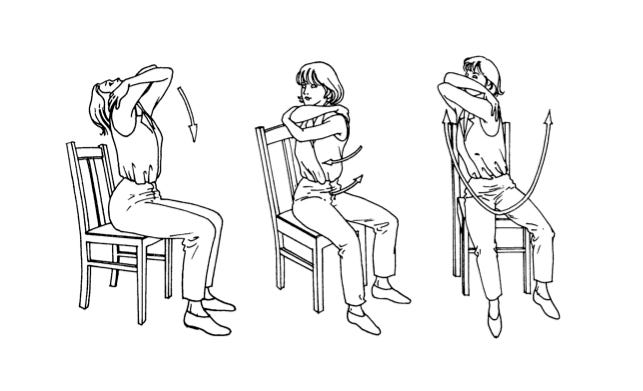
Stay up-to-date
You won’t have to worry about missing anything. Every new edition of the newsletter goes directly to your inbox.
My Background
I have a long history with movement. It started not long after I was born. Although I don’t remember all these earlier movements, I know a lot of it involved my mouth and doing basic things like breathing and sucking.
Later on, I did something really strange in the animal world: I began to use my mouth to form words. Simultaneously I learned to hear words and understand their meaning.
Still later, I learned to use my hands while also learning how to do another unusual animal trick—I learned to stand up and walk on only two legs.
As I got older, I played sports and I took classes in something called “Physical Education.” Running regimented drills in practice and climbing the rope in gym, an awareness grew: something more than just physical was going on.
My breathing, my posture, my entire physical organization was in fact a psychological or psycho-physical organization. My strength relies on my coordination, which relies on my balance, which relies on my posture, which relies on my breathing.
I realized that embodying myself was a difficult social challenge. Even just lounging in a chair by myself, I became aware that the way I was breathing reflected my family history, my childhood experiences, my belief systems, and my anticipations of the future. All of these remote, unconscious factors defined how I would breathe, even as I sat alone.
As an undergraduate, I received a degree in biology with an emphasis in evolution and a second undergraduate degree in dance and physical education. I became interested in how embodied beings encountered the world differently depending on the quality of their movements.
Fortunately, about this time, a new field developed and I entered graduate school in Somatic Psychology, which examines the physical basis of motion and emotion.
What I find particularly intelligent about Dr. Wildman's approach is that he doesn't evoke anything supernatural, but he is fiercely focused on your capacity to learn a new and easier way of moving. When you finish these lessons, you'll find yourself feeling more limber and free of old aches and pains.
-Dr. Kenneth Dychtwald, Author and Founder of AgeWave
I spent decades studying with Dr. Stanley Keleman, the great pioneer of Somatic Psychotherapy; Anna Halprin, the developer of what’s known as Dance Theatre; and Dr. Moshe Feldenkrais, perhaps the greatest movement scientist of the 20th century, who developed numerous applications of brain sciences in relation to learning movement and how to sense ourselves. All three of my major teachers helped me understand the importance of perceptual and sensory awareness.
Frank’s approach to pain and mobility problems is so successful that I would recommend it to anyone wanting pain relief, improved coordination, and strength.
-Dr. Sheldon Margen, former consultant to the World Health Organization and professor emeritus of public health at UC Berkeley
After devouring courses in anatomy, neurophysiology, and anything relevant to how we learn to become human and embody ourselves, I felt fully able to launch myself into the new field of movement sciences.
I began to teach courses in human movement sciences in many countries around the world. In some countries, this work helped restructure physical therapy departments, hospital rehab systems, and programs for older adults. I trained many athletic trainers and sports psychologists to expand their concept of learning through movement.
Join me in this exploration of physical intelligence!